William H. Whyte

"William H.(Holly) Whyte (1917-1999) is considered the mentor for Project for Public Spaces because of his seminal work in the study of human behavior in urban settings. While working with the New York City Planning Commission in 1969, Whyte began to wonder how newly planned city spaces were actually working out – something that no one had previously researched. This curiosity led to the Street Life Project, a pioneering study of pedestrian behavior and city dynamics.
PPS founder and president Fred Kent worked as one of Whyte’s research assistants on the Street Life Project, conducting observations and film analyses of corporate plazas, urban streets, parks and other open spaces in New York City. When Kent founded PPS shortly thereafter, he based the organization largely on Whyte’s methods and findings. More than anything, Whyte believed in the perseverance and sanctity of public spaces. For him, small urban places are “priceless,” and the city street is “the river of life…where we come together.” Whyte’s ideas are as relevant today as they were over 30 years ago, and perhaps even more so.
“Whyte’s work remains a living and usable handbook for improving our cities, our countryside, and our lives.”
– Nathan Glazer, Wilson Quarterly
“Holly always believed that the greatest lesson the city has to offer us is the idea that we are all in it together, for better or for worse, and we have to make it work.”
– Paul Goldberger, Architecture

Biography

Whyte was born in West Chester, Pennsylvania in 1917. He joined the staff of Fortune magazine in 1946, after graduating from Princeton University and serving in the Marine Corps. His book The Organization Man (1956), based on his articles about corporate culture and the suburban middle class, sold more than two million copies. Whyte then turned to the topics of sprawl and urban revitalization, and began a distinguished career as a sage of sane development and an advocate of cities.
In 1969 Whyte assisted the New York City Planning Commission in drafting a comprehensive plan for the city. Having been critically involved in the planning of new city spaces, he came to wonder how these spaces were actually working out. No one had researched this before. He applied for and received a grant to study the street life in New York and other cities in what became known as the Street Life Project. With a group of young research assistants, and camera and notebook in hand, he conducted pioneering studies on pedestrian behavior and breakthrough research on city dynamics.
All told, Whyte walked the city streets for more than 16 years. As unobtrusively as possible, he watched people and used time-lapse photography to chart the meanderings of pedestrians. What emerged through his intuitive analysis is an extremely human, often amusing view of what is staggeringly obvious about people’s behavior in public spaces, but seemingly invisible to the inobservant.
The core of Whyte’s work was predicated on the years he spent directly observing human beings, and he authored several texts about urban planning and design and human behavior in various urban spaces. Whyte served as an advisor to Laurence S. Rockefeller on environmental issues and as a key planning consultant for major U.S. cities, traveling and lecturing widely. He was a Distinguished Professor at Hunter College of the City University of New York. He was a trustee of the American Conservation Association, and was active in the Municipal Art Society, the Hudson River Valley Commission and President Lyndon B. Johnson’s Task Force on Natural Beauty.

Perspectives

The Social Life of Public Spaces

Whyte wrote that the social life in public spaces contributes fundamentally to the quality of life of individuals and society. He suggested that we have a moral responsibility to create physical places that facilitate civic engagement and community interaction.

Bottom-Up Place Design

Whyte advocated for a new way of designing public spaces – one that was bottom-up, not top-down. Using his approach, design should start with a thorough understanding of the way people use spaces, and the way they would like to use spaces. Whyte noted that people vote with their feet – they use spaces that are easy to use, that are comfortable. They don’t use the spaces that are not.

The Power of Observation

Whyte suggested that through observation and by talking to people, we can learn a great deal about what people want in public spaces and can put this knowledge to work in creating places that shape livable communities. We should therefore enter spaces without theoretical or aesthetical biases, and “look hard, with a clean, clear mind, and then look again – and believe what you see.”

Quotable

“What attracts people most, it would appear, is other people.”
“One felicity leads to another. Good places tend to be all of a piece – and the reason can almost always be traced to a human being.”
“It is difficult to design a space that will not attract people. What is remarkable is how often this has been accomplished.”
“We are not hapless beings caught in the grip of forces we can do little about, and wholesale damnations of our society only lend a further mystique to organization. Organization has been made by man; it can be changed by man.”
“The street is the river of life of the city, the place where we come together, the pathway to the center.”
“If there’s a lesson in streetwatching it is that people do like basics — and as environments go, a street that is open to the sky and filled with people and life is a splendid place to be.”
“The human backside is a dimension architects seem to have forgotten.”
“Up to seven people per foot of walkway a minute is a nice bustle”
“There is a rash of studies underway designed to uncover the bad consequences of overcrowding. This is all very well as far as it goes, but it only goes in one direction. What about undercrowding? The researchers would be a lot more objective if they paid as much attention to the possible effects on people of relative isolation and lack of propinquity. Maybe some of those rats they study get lonely too.”
“So-called ‘undesirables’ are not the problem. It is the measures taken to combat them that is the problem.”
“I end then in praise of small spaces. The multiplier effect is tremendous. It is not just the number of people using them, but the larger number who pass by and enjoy them vicariously, or even the larger number who feel better about the city center for knowledge of them. For a city, such places are priceless, whatever the cost. They are built of a set of basics and they are right in front of our noses. If we will look.”

The disturbing and sometimes tragic challenge of walking in America

Kaid Benfield, Better! Cities & Towns 
 
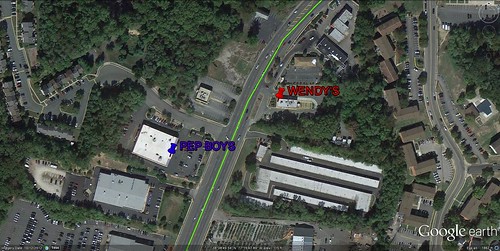
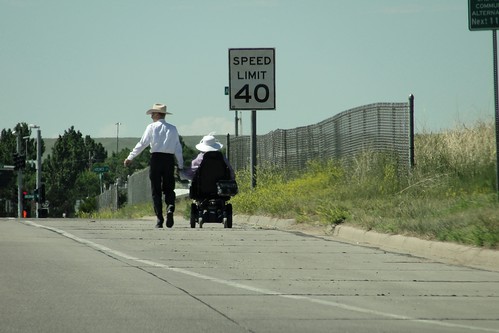
"In much of America, walking – that most basic and human method of movement, and the one most important to our health – is all but impossible. Maybe not literally impossible, but inconvenient at best, and tragically dangerous way too often. Chances are that, no matter where we are from, the stretches of road shown in the photos accompanying this article look somewhat familiar.  They might as well be labeled Anywhere, USA.  The one above is from Denver.  The Google Earth image below shows the US Route 1 corridor in Woodbridge, Virginia, about 25 miles south of downtown Washington, DC.  I'm going to spend some time on Woodbridge today because of some incidents that have occurred there.
   US Route 1, Woodbridge, VA (via Google Earth)
Home to the Potomac Mills discount mega-mall and not far from the Quantico Marine Corps base, Woodbridge is a diverse “census-designated place and magisterial district” whose population is 42 percent white, 28 percent black, and 32 percent Hispanic.  It was mostly farms and light industrial complexes until the 1980s when it began to be more suburbanized.  What you see in the satellite view are, among other things, several auto dealerships and automobile service facilities, some single-family homes, some apartments, a trailer park, and a self-storage facility; all seem sort of plopped down by happenstance.
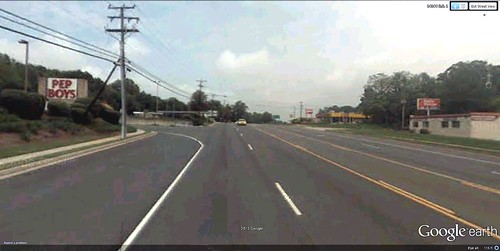
What you don’t see are any but the crudest accommodations for walking.  This particular part of Woodbridge is a place for being either indoors or in a motor vehicle.  If you were, say, an employee at the Pep Boys auto parts store, didn’t have a car on a given day, and wanted to grab a sandwich for lunch at Wendy’s right across the street, you’d have to walk nearly a mile, round trip, to cross the road with the benefit of a traffic signal.  Even then, half your trip would have no sidewalk.
 looking north on US Route 1, Woodbridge, VA (via Google Earth)
What many people with limited time would understandably do in that situation, instead, is attempt to cross the road using the shortest and most direct route between Pep Boys and Wendy’s, and hope their instincts and powers of observation would enable them to do so without getting hit.  Some people do exactly that, without consequence.
But other pedestrians aren’t so lucky.  If they do get hit by a motor vehicle, under Virginia law the pedestrian is at fault for “interfering with traffic.”  Cars come first in the eyes of the law, and anyone who fails to respect that axiom takes chances in more ways than one.
I mention all this because it’s more or less what actually happens on this stretch of Route 1.  Videographer Jay Mallin has made a video about it.  It’s at the bottom of this post, it’s good, and you should watch it.  But first allow me to take a bit more of your time by setting the context.
 Pep Boys and Wendy's on Route 1 (via Google Earth)
I was reminded of this story while browsing some articles I had saved on my Google Reader, one of which was “How pedestrians interfere with traffic,” written by the astute and prolific David Alpert on the Greater Greater Washington blog.  David was impressed with Mallin’s video, which tells the story of two men who were hit by motor vehicles while trying to cross the road in separate incidents near the section of Route 1 that I marked.  (You can see the Wendy’s in the background of the video.)  Both pedestrians were evacuated to the hospital, and both were charged by police with interfering with traffic.  The drivers were not charged.
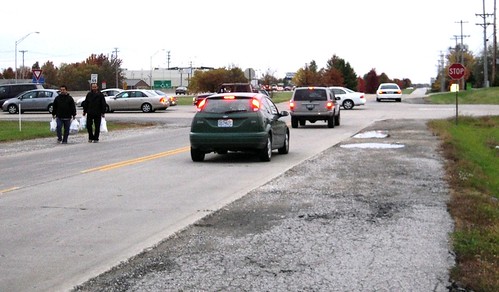
Some would-be pedestrians in similar circumstances suffer far worse consequences, unfortunately.  As some readers may remember, in 2011 a working single mother named Raquel Nelson was convicted of homicide after her four-year-old son was killed while both were trying to cross a busy road in suburban Atlanta.  They were on their way home, carrying groceries after getting off the bus at a stop with no convenient crosswalk.  As I wrote then, whatever Nelson’s legal culpability, I find it shocking that Atlanta officials chose to exercise their discretion to prosecute her for homicide under those circumstances.  At least in that case the driver, who had been drinking and taking painkillers, and who had fled the scene, was also charged.
The nonprofit advocacy coalition Transportation for America (NRDC is a member) has found that, from 2000 through 2009, more than 47,700 pedestrians were killed in the United States.  This is the equivalent of a jumbo jet full of passengers crashing roughly every month.  On top of that, more than 688,000 pedestrians were injured over the decade, a number equivalent to a pedestrian being struck by a car or truck every 7 minutes.
   Tom Mason, courtesy of Transportation for America)
Even if you’re not killed or injured, you can't help but find much of suburban America inhospitable to walking.  Just this week, Ben Ross reported in Greater Greater Washington that it took him eight and a half minutes to cross legally to the other side of a Maryland street, traversing 28 traffic lanes along the way.  Two pedestrians had been severely injured at the same intersection earlier this month.  Is it any wonder that, in the US, those with a choice choose to drive even the shortest of distances?
In 1973, sixty percent of American kids walked to school; by 2006, that portion had dropped to a paltry 13 percent.  As a sign that times have changed, a story surfaced a few years ago that a mom and her 12-year-old son in Saratoga Springs, New York, were actually forbidden to ride bikes together to the son’s school, even on a bike path separated from car traffic.  On the other side of the country, Laguna Beach refused to join over 400 California communities participating in International Walk to School Day, a supervised event, because “there are few sidewalks, winding roads with blind corners and a considerable distance for our students to travel and we cannot endorse walking or biking to school.”
In Montgomery County, Maryland, the local Department of Transportation refused parents’ request for a crosswalk linking a large residential development to an elementary school right across the street because “the safest way is to have them bused to school” instead.  If walking is no longer safe and convenient in relatively upscale Saratoga Springs and Laguna Beach, how are we going to fix a suburbanizing place whose residents may struggle to afford cars and arguably are even more in need of good alternatives?
 intersection that puts people first (by and courtesy of Dhiru Thadani)
Jeff Speck’s current book Walkable City provides some answers, but they aren’t going to work everywhere.  His “ten steps of walkability” to create urban environments more conducive to foot travel include such effective measures as placing more housing downtown, restricting free parking, and coordinating transit with nearby land uses.  If we do these things in Boise or Houston or Greensboro or even Bakersfield, it is likely that we will, indeed, make the city more walkable.
But can we have a walkable city where we don’t have a city in the first place?  What if the location is just a “census-designated place” with a bunch of uncoordinated and unplanned properties that somehow ended up near each other along a high-speed road?  The stretch of Route 1 in Woodbridge is not remotely ready for sophisticated measures. 
I suppose one answer is that, as the economy allows new businesses and homes to be built in and around the bad stuff, we gradually can make the newer land uses better and more “walk-ready” over time, so that the place can function better for pedestrians when the good stuff reaches critical mass.  That might take a while, though, because many of these places are not the kind of prosperous communities where change can occur rapidly and with the degree of investment necessary to do it right.
Maybe Jeff could write a sort of prequel to his book (easy for me to say), with ten preliminary steps to get a mess of a place such as Route 1 in Woodbridge ready for the ten steps of walkability featured in his current one.
  Arthur Wendel, courtesy of Transportation for America)
Whatever the right approach, it matters:  a lot of places in America are a lot like Woodbridge.  And, if we don’t start exercising more, including by walking, the prospects for our collective health are daunting.  The single most alarming public health trend in the United States today is the dramatic rise in overweight and obesity, bringing serious risks of heart disease, diabetes and other consequences leading to life impairment and premature death.
While these are complex challenges, and there are many factors at play, our country’s sedentary lifestyle is an important one.  In a massive study of half a million residents of Salt Lake County, researchers at the University of Utah found that an average-sized man weighed 10 pounds less if he lived in a walkable neighborhood – “those that are more densely populated, designed to be more friendly to pedestrians and have a range of destinations for pedestrians” – versus a less walkable one.   A woman of average size weighed six pounds less.   Other research has found that men and women age 50–71 who took a brisk walk nearly every day had a 27 percent reduced death rate compared to non-exercisers.
This isn't the first time I have written on this subject, and it certainly won't be the last.  It's too important to ignore.
Now, as promised, here’s the video:
Kaid Benfield is director of sustainable communities at The Natural Resources Defense Council in Washington, DC. This blog also appeared on NRDC Switchboard where Kaid writes (almost) daily about community, development, and the environment.

For more in-depth coverage: 
• Subscribe to Better! Cities & Towns to read all of the articles (print+online) on implementation of greener, stronger, cities and towns.
• Get the December 2012 issue. Topics: Sprawl versus walkable: Housing study, Nashville code creates value, Wake up call from Sandy, Downtown Columbia, Smart growth at the polls, Buffalo code reform, Housing and driving costs, Comparing new urban and conventional development, NorthWest Crossing, Alexander's The Battle for the Life and Beauty of the Earth
• Get New Urbanism: Best Practices Guide, packed with more than 800 informative photos, plans, tables, and other illustrations, this book is the best single guide to implementing better cities and towns".

Fonte e imagens: http://bettercities.net/news-opinion/blogs/kaid-benfield/19343/disturbing-and-sometimes-tragic-challenge-walking-america

Manual de Boas Práticas em Espaços Verdes

"Os espaços verdes são concebidos para cumprirem determinados objectivos gerais e particulares considerando as condições físicas em que vão ser instalados e mantidos. Neste capítulo são revistos os aspectos fundamentais a ponderar no processo de concepção dos espaços verdes, incluindo factores económicos, ambientais, sociais e estéticos.

O sucesso dos espaços verdes depende em grande medida de factores ambientais locais, como o solo e a água, porque estes influenciam directamente o estabelecimento e o crescimento das plantas seleccionadas para constituírem a essência desses lugares. São, por esse motivo,desenvolvidos neste capítulo os temas da preparação do solo, rega, drenagem e a selecção e instalação de relvados e de árvores, arbustos e herbáceas. À medida que se expandem para áreas naturais, as cidades podem passar a incorporar alguns dos elementos originais dessas áreas que funcionarão no futuro como espaços verdes.

É apresentado, por isso, neste capítulo um conjunto de indicações muito valiosas quanto à preservação de árvores em locais de construção. Serão finalmente abordadas opções de utilização de materiais inertes, mobiliário, pavimentos e outros elementos.

O sucesso dos espaços verdes depende em grande medida de factores ambientais áreas naturais, as cidades podem passar a incorporar alguns dos elementos originais dessas áreas que funcionarão no futuro como espaços verdes.

É apresentado, por isso, neste capítulo um conjunto de indicações muito valiosas quanto à preservação de árvores em locais de construção. Serão finalmente abordadas opções de utilização de materiais inertes, mobiliário, pavimentos e outros elementos. dos espaços verdes, incluindo factores económicos, ambientais, sociais e estéticos.locais, como o solo e a água, porque estes influenciam directamente


Download de ficheiros.
Glossário (PDF - 418 Kb)
1 Análise do local e envolvente (PDF - 425 Kb)
2 Preparação do solo (PDF - 261 Kb)
3 Rega e Drenagem (PDF - 335 Kb)
4 Selecção e instalação de espécies vegetais (PDF - 1.913 Kb)
5. Sugestão de Espécies Vegetais para as condições da cidade Bragança (PDF -189 Kb)
6. Preservação de árvores em locais de obra (PDF - 389 Kb)


Manutenção e gestão.
Uma vez instalados, os espaços verdes necessitam de um conjunto de cuidados, permanentes ou temporários, destinados a manter as suas estruturas e funções. Estes cuidados consistem em práticas diversas, aplicadas principalmente a árvores, arbustos e relvados, de forma a assegurar a sua vitalidade e sanidade bem como outros aspectos relevantes, designadamente elementos estéticos.

Incluem-se neste capítulo de manutenção e gestão as práticas ligadas à fertilização, rega e drenagem, podas de árvores e arbustos, manutenção de relvados e protecção de árvores contra agentes nocivos. Uma vez que existem riscos associados à manutenção de árvores de grande porte em espaços urbanos, particularmente das mais debilitadas, dedica-se um sub-capítulo à sua minimização.

Outros aspectos fundamentais da gestão de espaços verdes são a manutenção de corredores ripícolas nas cidades, elementos essenciais da sua estrutura e funcionamento, o destino a dar aos materiais resultantes das práticas de manutenção, nomeadamente os resíduos de podas e dos corte de relva, e as regras de limpeza e segurança dos espaços verdes.

São ainda descritos os métodos seguidos na complexa tarefa de recolha, análise de utilização de quantidades muito elevadas de informação relativa aos espaços verdes e aos seus elementos constituintes. tão as práticas ligadas à fertilização, rega e drenagem, podas de árvores e arbustos, manutenção ripícolas nas cidades, elementos essenciais da sua estrutura e funcionamento, o destino a dar aos materiais resultantes das práticas de manutenção, nomeadamente os resíduos de podas e dos corte de relva, e as regras de limpeza e segurança dos espaços verdes.

São ainda descritos os métodos seguidos na complexa tarefa de recolha, análise de utilização de quantidades muito elevadas de informação relativa elementos estéticos.

Incluem-se neste capítulo de manutenção e gestão de relvados e protecção de árvores contra agentes nocivos. Finalmente, dedica-se atenção ao envolvimento e participação da população na gestão dos espaços verdes porque estes só fazem sentido se considerados em conjunto com os seus utilizadores que podem desempenhar um papel fundamental na sua gestão e na sua manutenção nas melhores condições.


Download de ficheiros.
7. Fertilização (PDF - 210 Kb)
8. Rega (PDF - 464 Kb)
9 Relvados (PDF - 611 Kb)
10 Manutenção de Árvores (PDF - 568 Kb)
11 Manutenção de Arbustos (PDF - 663 Kb)
12 Protecção das árvores contra agentes nocivos (PDF - 883 Kb)
13 Árvores de risco (PDF - 604 Kb)
14 Linhas de água e galerias ripícolas (PDF - 224 Kb)
15 Inventário e Gestão da Informação (PDF - 1.523 Kb)
16 Resíduos de Jardim (PDF - 190 Kb)
17 Envolvimento e part. da população na gestão dos espaços verdes (PDF - 249 Kb)
18 Segurança e higiene nos espaços verdes (PDF - 230 Kb)"

Vamos partilhar mais coisas e pagar com dinheiro digital


"Esqueçam as pilhas de livros a encherem a casa, esqueçam um carro por pessoa. E preparem-se para o mundo das moedas digitais, que vão começar a expandir-se. Lauren Anderson, do Collaborative Consumption Lab, e Stan Stalnaker dão-nos alternativas de consumismo e poupança. Primeiro trabalho da série Conversas de fim de ano.

Já andamos a partilhar, a reutilizar, a reciclar, a emprestar, mas vamos fazê-lo muito mais, segundo o movimento Collaborative Consumption (CC, Consumo Colaborativo) - um conceito, um site e uma consultora nascidos do livro What’s Mine is Yours – How Collaborative Consumption is Changing the Way We Live.
E que dizer das moedas que pesam na carteira, com tamanhos diferentes, e a exigirem toda uma rede de produção - da manufactura à distribuição? O mais provável é virem a ter uma concorrência feroz de milhares e milhares de outras moedas digitais como a Ven, criada por Stan Stalnaker e transaccionada na rede social Hub Culture– foi a primeira moeda privada a ser listada na Thomson Reuters, é sustentável e mais imune às flutuações do mercado, defende.
No site do Collaborative Consumption há uma actualização constante das tendências globais da economia de partilha e vai-se fazendo o registo da explosão de novas formas de troca, comércio, aluguer, etc em todo o mundo, baseadas na colaboração e na ideia de comunidade. 
Embora existam especificidades geográficas, a directora de inovação do CC, Lauren Anderson, aponta as semelhanças: há cada vez mais pessoas interessadas em aceder a “meios eficazes de obterem aquilo que querem” – “sejam coisas mais materiais ou menos tangíveis como tempo, aptidões ou espaço”. “Isso tem gerado uma revolução económica desde a crise que levou as pessoas a reconsiderarem onde gastam o seu dinheiro, o valor que dão a coisas materiais, mas também levou a uma maior consciência ambiental global”, diz. “Tem acontecido também pela grande necessidade de comunidade que nasceu depois de décadas de isolamento e de independência, em que sentíamos que tínhamos que nos bastar a nós próprios.
Através do consumo colaborativo as pessoas estão a perceber o valor da comunidade. E com a Internet e as novas tecnologias estamos a redefinir o termo comunidade e a forma como nos ligamos a ela”. Ou seja, se antigamente emprestávamos a alguém alguma coisa, o mais provável era esquecermo-nos dela – mas hoje, graças à tecnologia, é muito mais fácil emprestar ou trocar coisas mesmo com desconhecidos porque temos maneira de registar e traçar o rasto das coisas.
Sem conseguir quantificar o movimento em termos de número de pessoas envolvidas, Anderson diz, no entanto, que se pode ter uma ideia olhando para indústrias ou sectores específicos: só o Airbnb cresceu no último ano o que cresceu nos três anteriores (entre 2008 a 2011 tiveram 5 milhões de reservas, passaram para 10 milhões este ano). Esta plataforma junta pessoas que querem alugar os seus quartos/casas com quem anda à procura deles, ou seja, junta quem quer fazer dinheiro a quem quer poupar dinheiro. Tem de tal forma crescido que há uns tempos em Nova Iorque era maior o número de reservas de Airbnb do que de hotéis.

Voltar a formas antigas
No fundo, há um regresso a formas antigas de troca e partilha, um regresso ao modo de vida colaborativo: “Quando a Rachel Botsman estava a escrever o livro [What’s Mine is Yours…] percebeu que havia três coisas que poderiam categorizar exemplos de colaboração”, lembra Lauren Anderson. “O primeiro eram os mercados de redistribuição: passar coisas que não são necessárias num sítio para outro onde são necessárias; o segundo são os sistemas de produtos ou serviços, em que as coisas podem ser compradas, emprestadas ou partilhadas mas pertencem a outra pessoa ou empresa (partilha de carros, por exemplo); e a terceira, os modos de vida colaborativo que são coisas menos tangíveis – o nosso tempo, através de bancos do tempo, as nossas capacidades, que são o nosso conhecimento que pode ser partilhado em plataformas, e o espaço, que pode ser o Airbnb, lugares de estacionamento ou armazéns”.
Factores essenciais para que estes negócios, muitos deles baseados no sistema peer-to-peer (interpares)? Confiança e eficácia. Sem confiança os sistemas não funcionam, ou seja, quer seja a empresa a controlar, ou a passar essa responsabilidade aos membros quando a “rede” cresce, a confiança “é absolutamente crucial”.
Há um exemplo que serve para ilustrar a forma como este factor “evoluiu”: a plataforma Zimride (partilha de boleias). Quando arrancou, os fundadores não podiam desatar a pedir às pessoas para começarem a dar boleias. Por isso foram directamente às empresas e às universidades apresentar a ideia e sugeriram que os estudantes e os empregados procurassem alguém na rede com quem partilhar deslocações – “porque já existe um nível de confiança entre as pessoas que estudam na mesma universidade ou trabalham na mesma empresa, mesmo que não se conheçam”. Só depois se lançaram para as plataformas abertas. “Notaram que, ao princípio, as pessoas só usavam as redes privadas, mas agora usam as plataformas públicas porque se criou confiança, sentiam-se mais confortáveis. Esse é um passo enorme na forma como podemos confiar e contar uns com os outros para ter as coisas de que precisamos – e é uma coisa que vai começar a expandir-se à medida que nos sentirmos mais confortáveis”.
O outro factor, a eficácia, é o que motiva a adesão: “Quando se pensa em partilha de carros, aquilo que se quer é que seja útil”, diz. “Tem que ser mais fácil contratar/adquirir esses serviços do que sermos nós a fazer”.
O consumo colaborativo parte também da ideia de que hoje procuramos mais experiências do que propriamente objectos físicos. Vamos ser menos consumistas ou vamos passar a coleccionar experiências como coleccionávamos coisas? “Acredito que nos estamos a afastar dos típicos ideais do consumismo em que quanto mais tínhamos, melhor éramos”, responde Anderson. “Acho que estamos à procura de formas mais significativas de nos relacionarmos uns com os outros. O papel das empresas tradicionais é olharem para o que está a acontecer: as pessoas estão fartas de transacções de grande volume e querem relacionar-se com seres humanos reais”.
 
Tendência para desmaterializar
Desejo de contacto humano, mas tendência para a desmaterialização: não deixa de ser curioso que em relação aos objectos tipo CD, livro, DVD, a tendência seja para nos livrarmos deles, tal como acontece com o próprio dinheiro. Na Hub Culture (HC) transaccionam-se ideias, e não só, mas promovem-se encontros e acontecimentos no mundo real. Trocam-se aptidões, serviços por Ven, a moeda que nasceu em 2007 para ser usada pelos membros da HC como sistema de pontos.
Só em 2009 é que passaram a ter “um cabaz”a criar o valor da Ven – é uma mistura entre as moedas internacionais, bens como ouro, prata e crude, e carbono “de forma a torna-la mais verde”, explica Stan Stalnaker. “Ao incorporar os preços do carbono no cabaz ligámos a moeda ao ambiente, e tornámo-nos na única moeda que tem o carbono incluído. Actuamos um pouco como o Banco Central: temos os bens em reserva. A maior parte dos países só tem em reserva cerca de 2% dos bens; como somos muito pequenos temos que ter 100% em reserva. Não damos números sobre as reservas mas já trocámos o equivalente a 1.5 milhões de dólares e está a crescer rapidamente”.
As vantagens ambientais são estas: “De cada vez que se usa Ven está-se a ajudar o planeta, porque teremos mais capacidade de investir nas reservas de carbono. Até agora, salvámos 25 mil hectares de floresta na Amazónia usando a Vem”.
As outras vantagens da Ven, que só funciona na rede ou nos chamados Pavillion da Hub Culture (espaços físicos espalhados pelo mundo onde se desenvolvem actividades, como co-working), é que é “uma óptima barreira contra a inflação porque é suportada em parte pelos bens: se eles sobem, a Ven também”. “É uma moeda naturalmente menos flutuante: desce e sobe menos do que as outras moedas e do que os bens.”
Podemos comprar Ven com dinheiro ou vendendo os nossos serviços – “no fundo tudo o que se pode comprar com dinheiro pode comprar-se com Ven”.
Stalnaker, que trabalhou na área de marketing da Time Warner, imagina que daqui a cinco anos vamos ter mais de 5 mil moedas digitais, e que um dia cada um terá a sua própria moeda. De alguma forma, já há vários tipos de “moeda digital” além das que se intitulam como tal – exemplo são as empresas com cartões que têm sistema de pontos acumulados. “Acho que um dia cada um terá a sua própria moeda e essas moedas serão transaccionadas umas com as outras. Você é boa escritora e eu um bom conferencista, provavelmente vamos trocar uma coisa pela outra”.
E uma das tendências, antecipa, é a junção do dinheiro e da informação: “No Facebook há pelo menos 80 mil milhões de pontos de informação: temos pessoas, lugares, etc. Os algoritmos vão um dia calcular o valor dessas coisas e a partir daí cria-se a capacidade de negociar cada uma dessas informações: quantos ‘gostos’ no Facebook valem um Ven? Isso é o futuro do dinheiro – todos os pontos no gráfico social vão tornar-se monetizáveis, adquirem valor e esse valor será transaccionado”.
Estes são dois exemplos de como a economia de mercado, baseada num consumismo desenfreado, está a transformar-se – nem Lauren Anderson, nem Stan Stalnaker arriscam dizer que os movimentos que representam vão substituir completamente os actuais, mas ambos notam mudanças significativas no comportamento dos consumidores.
“Acreditamos que o consumo colaborativo vai continuar a crescer, e andará lado a lado com a economia tradicional”, diz a directora de inovação do CC. “Mas vai ter um impacto enorme na economia tradicional na medida em que já não criar produtos para serem usados por uma única pessoa mas para serem partilhados. E as empresas vão deixar de se dedicar exclusivamente aos produtos e a começar a ter relações com os seus clientes em vez de fazerem apenas meras transacções – ou seja, as empresas vão querer manter uma relação com os seus clientes, personalizando os produtos e prolongando a vida desse produto”.  
Para quem gosta de ver a cor do dinheiro, não há razão para alarme: a Ven e outras moedas digitais não vão ameaçar as actuais moedas, analisa Stalnaker. “As pessoas continuarão a usar euros, dólares, libras. O que vai acontecer é o oposto da ideia de uma moeda controlar as outras – vão existir várias que permitem uma maior escolha. Mais escolha dá mais oportunidades, mais flexibilidade e isso cria um maior crescimento económico”."

Fonte e imagem: http://www.publico.pt/sociedade/noticia/xxxxconsumo-vamos-partilhar-mais-coisas-e-pagar-com-dinheiro-digital-1578140

Life flourishes even in the cracks, David Suzuki

"Have you ever thought about the grass that grows in sidewalk cracks? These hardy plants are generally written off as undesirable. They're routinely trampled, savaged by extreme summer heat, washed out by rainfall and buried by winter snow. To survive these conditions is a testament to the plants' resilience, but they rarely get much love or attention.
That's why I'm intrigued with the work of Nova Scotia researcher Jeremy Lundholm and his team at Saint Mary's University. They've been examining plant species in sidewalk cracks and other nooks and crannies in Halifax. Their research demonstrates something simple and surprising: hardy species found in these environments are similar to those occupying nature's own inhospitable spaces - steep cliffs and barren rock slopes.
While the connection between pavement and cliff face isn't immediately obvious, it makes sense. Plant species that succeed in sidewalk cracks have similar qualities to ones that have adapted to inhabit crevices in exposed, rocky, windswept places.
As Lundholm says, this sort of research demonstrates that rather than seeing our communities as entirely human-created, unnatural environments, we should recognize that urban spaces are in many ways "structurally and functionally equivalent" to natural ecosystems.
In a recent article for The Nature of Cities, ecologist Eric W. Sanderson suggests we try to "conceive of cities in their entirety as ecological spaces." This vision of the city as ecosystem includes all streets, sidewalks, buildings and parking lots interacting in a vibrant ecological mosaic with soil, water, air and "everyone and everything that participates in the great congress of life on Earth."
Sanderson says looking at the built landscape of our towns and cities this way allows fascinating comparisons: steep cliff and tall skyscraper, parkland and meadow, gutter and stream. The urban environment contains numerous ecological niches that have analogues elsewhere in nature. It's just a relatively new type of landscape.
And within this complex urban ecosystem, species are constantly adapting. The Smithsonian Conservation Biology Institute's Migratory Bird Center found their subjects often adapt to human environments. Some songbirds have learned to survive in noisy urban landscapes by changing the melodies they use to communicate. They sing higher notes to trump ambient background city noise and deeper notes in areas with many buildings and hard surfaces. Nesting on the ledges of high-rises rather than cliff faces has even helped peregrine falcons adjust to city life and assisted their dramatic post-DDT comeback.
Yet, while some of our feathered friends and crevice-loving plants have been adapting, the speed and scale of urbanization in Canada has pushed many native species to the brink of extinction.
Ducks Unlimited found that over 72 per cent of the original wetlands in southern Ontario have been developed, and the region is now home to about one third of the province's species at risk. In British Columbia, more than 100 imperilled plants and animals are found in the Metro Vancouver area.
While we need to show some love to the current occupants of nooks and crannies, we must also redouble our efforts to bring nature back to the city and enhance what assets remain.
Efforts like the RONA Urban Reforestation program are on the right track. The hardware retailer is helping to green urban spaces with its support for planting thousands of trees in Canada's cities. This past summer it also started a pilot program aimed at promoting native shrubs and trees through in-store nurseries.
Planting native species in our gardens and communities is increasingly important, because indigenous insects, birds and wildlife rely on them. Over thousands, and sometimes millions, of years they have co-evolved to live in local climate and soil conditions.
To find out more about the benefits of planting indigenous species, contact the North American Native Plant Society or check out the excellent Grow Me Instead guides available for several provinces.
Ultimately we need to recognize that while humans continue to build urban landscapes, we share these spaces with others species. Nature surrounds us, from parks and backyards to streets and alleyways. Next time you go out for a walk, tread gently and remember that we are both inhabitants and stewards of nature in our neighbourhoods.
By David Suzuki with contributions from David Suzuki Foundation Communications Specialist Jode Roberts.

For more insights from David Suzuki, please read Everything Under the Sun (Greystone Books/David Suzuki Foundation), by David Suzuki and Ian Hanington, now available in bookstores and online".

Eliza Southwood

"About me: former architect, studied at Glasgow School of Art and now a full time artist and illustrator. Recent clients include cycle2cannes.org, boneshaker magazine, nittygritty.net, Cycling Active Magazine, Sustrans and Ecotour Expeditions Inc. Exhibitions this year have take place at Society Cafe, Bath, Milkwood Gallery, Cardiff, Bristol Bike Festival and Look Mum No Hands! All images © Eliza Southwood 2012" 
 

Bicicleta roubada XIII

"Roubaram a minha bicicleta de montanha amarela, que estava presa dentro da Faculdade de Belas Artes.
Não era valiosa, mas tinha um certo valor sentimental e tinha muito investimento em cima.
Não sei que cadeado tinha, eu tinha emprestado a bicicleta a um amigo.
Se alguém a vir ou souber de alguma coisa... provavelmente devem vendê-a com o suporte preto atrás e com os avanços de punho.
O travão de trás do lado esquerdo desencaixa-se se for puxado (tem o parafuso que o prende ao quadro partido lá dentro). O pneu da frente é liso e o de trás é cardado".